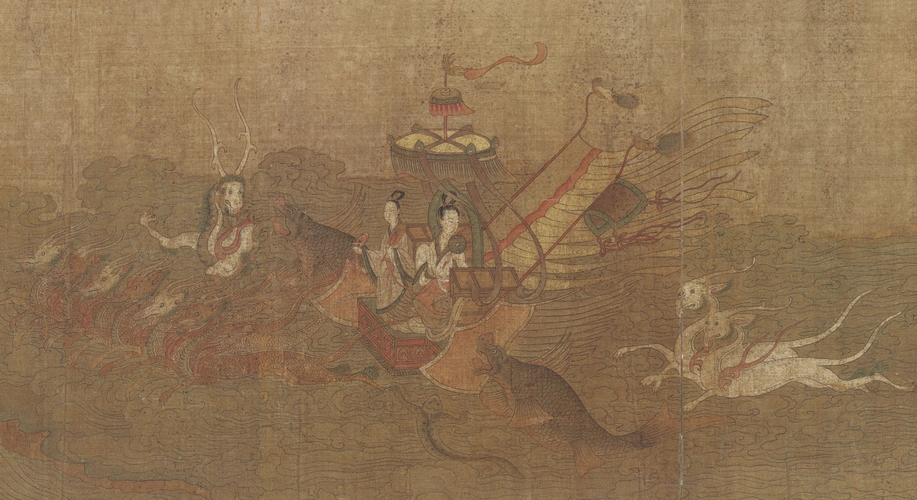
Luo Shen Fu (painting)
Introduction
Luo Shen Fu (painting) is a renowned ancient Chinese painting based on Cao Zhi's poem Luo Shen Fu (Ode to the Luo River Goddess). The original painting was created by Gu Kaizhi, an Eastern Jin Dynasty (317-420) master of painting.
This painting is a significant piece of Chinese art history, combining elements of poetry, mythology, and visual art to express the ethereal beauty and romantic allure of the Goddess of the Luo River. The painting has inspired numerous artists over centuries, leading to various reinterpretations and versions, each bringing its own artistic flair while remaining true to the original theme of divine beauty and tragic romance. The artwork is not merely a visual representation but also a cultural artifact that reflects the rich tradition of integrating literature and visual art in Chinese culture.
Historical Background
Cao Zhi's original poem tells the story of his enchantment with the Luo River goddess, believed to be the spirit of a prehistoric emperor’s daughter who drowned in the river. The story encapsulates themes of beauty, longing, and the supernatural, serving as a rich narrative foundation for artists. During the Jin Dynasty (265-420), this narrative was famously captured by Gu Kaizhi, a master painter who laid the groundwork for the painting that would become a classic artistic motif.
Artistic Features
Style and Technique
The painting Luo Shen Fu is celebrated for its intricate brushwork and elegant composition that exemplify the traditional Chinese painting techniques. Over time, different artists have interpreted these techniques, incorporating their own stylistic elements while maintaining the core aesthetic principles. The incorporation of both linearity and fluidity in the painting allows the goddess's form to appear both delicate and dynamic, a representation of the poem's lyrical quality.
Color Palette
The color palette of Luo Shen Fu paintings typically utilizes a range of muted yet harmonious hues, reflecting the refined aesthetic of Chinese art. Traditional ink and mineral pigments create a serene and otherworldly atmosphere, often using shades of blue, green, and earth tones to depict the natural setting of the Luo River. The use of color is both symbolic and aesthetic, with the goddess often depicted in flowing garments of soft colors that emphasize her divine status and ethereal beauty. The restrained use of color enhances the painting’s poetic nature, inviting viewers to engage both visually and emotionally with the depicted scene.
Iconography
Iconographically, Luo Shen Fu paintings are rich with symbolism. The central figure of the goddess is often portrayed with elongated features and an expression of gentle serenity, embodying ideals of beauty and grace from classical Chinese aesthetics. Surrounding elements, such as the flowing river, swans, and mythical creatures, serve to enhance the narrative and thematic depth of the painting. These elements are not merely decorative but are imbued with cultural symbolism, each contributing to the viewer’s understanding of the story and its emotional undertones. The interplay of these symbols creates a multilayered depiction that transcends mere visual representation, aligning closely with the spiritual and philosophical dimensions of the poem.
Notable Artists and Versions
Numerous artists across different dynasties have contributed to the legacy of Luo Shen Fu through their own interpretations. Gu Kaizhi’s original painting set a precedent with its pioneering style and thematic depth. During the Song Dynasty (960-1279), artists like Ma Yuan and Xia Gui introduced variations that emphasized landscape and atmosphere. The Ming Dynasty (1368-1644) saw further adaptations with artists like Chou Ying, who integrated more vibrant colors and expressive figures. These variations reflect both continuity and innovation, as each artist brought their unique perspective while honoring the foundational elements of the original narrative. The diversity of interpretations highlights the painting’s enduring appeal and its capacity to inspire creativity across generations.
Cultural Influence
Literary Connections
Luo Shen Fu is intrinsically linked to Cao Zhi’s poem, which remains a celebrated piece of Chinese literature. The poem's narrative of mythical romance and beauty has inspired countless adaptations in various artistic forms, including literature, theater, and film. This cross-disciplinary influence underscores the poem's cultural significance and its role in enriching the visual narrative of the painting. The interplay between the literary and visual forms provides a comprehensive cultural experience, allowing the story to reach a broader audience and enhancing its impact on Chinese cultural heritage.
Impact on Chinese Art
The impact of Luo Shen Fu on Chinese art is profound, serving as a benchmark for integrating narrative and visual artistry. Its influence extends beyond painting into broader artistic practices, encouraging a holistic approach to art that values thematic depth and aesthetic harmony. The painting has also played a role in shaping the development of Chinese landscape and figure painting, particularly in its use of narrative to enhance visual storytelling. The enduring popularity of Luo Shen Fu is a testament to its pivotal role in defining the aesthetic and thematic parameters of classical Chinese art.








